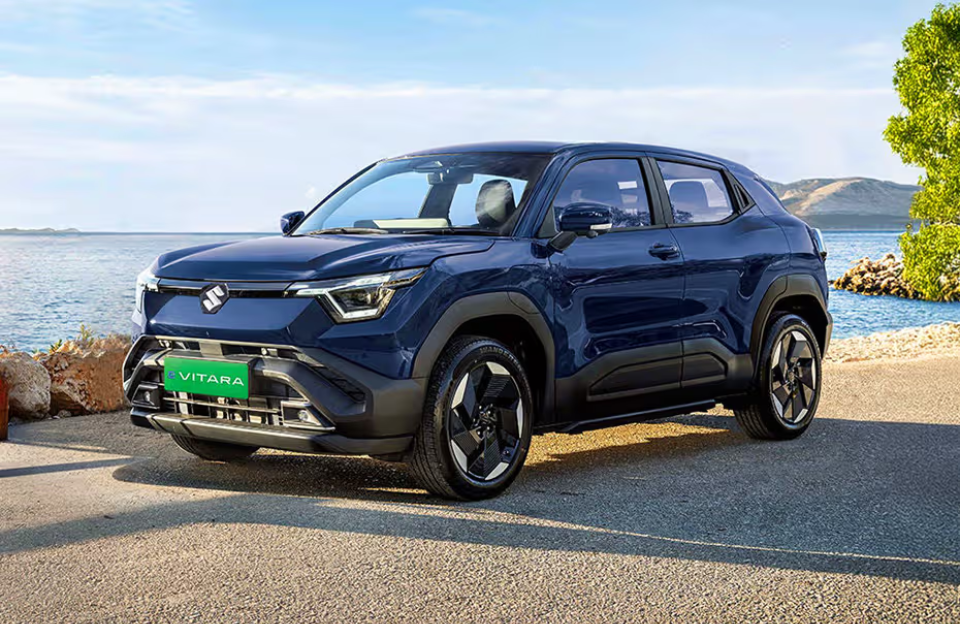
Maruti Suzuki is finally set to enter India’s electric vehicle landscape with the debut of its first fully electric SUV, the eVitara, on December 2, 2025. This launch has been one of the most anticipated in the Indian EV space because the eVitara is not just a domestic product but a global model already on sale in markets such as Japan and the UK. Production for India and export regions is underway at Maruti’s Hansalpur plant in Gujarat, which has already commenced international shipments. With exports planned to reach over 100 countries, the eVitara is central to Maruti’s global EV ambitions as well as its long-term strategy for India.
For the Indian market, the eVitara is expected to retain the core powertrain options seen overseas, though with a phased rollout that prioritises localisation and customer demand. Internationally, the eVitara comes with multiple battery and motor combinations, including a 49 kWh pack paired with a front-wheel-drive motor that produces 144 horsepower, and a larger 61 kWh version that delivers 174 horsepower in its FWD form. There is also a more powerful dual-motor AllGrip-e AWD version producing 184 horsepower, but this is not part of the initial India launch. Instead, Maruti will begin with the two front-wheel-drive configurations and evaluate the introduction of the AWD model later, depending on market response and component sourcing timelines.
Range figures for the eVitara place it comfortably among future electric SUVs in India. The 61 kWh FWD model is rated at 428 km (WLTP), making it a practical option for both everyday commuting and highway travel. The 49 kWh FWD version offers a more modest 344 km range, appealing to buyers prioritising affordability. The AWD version sits between the two at 394 km but will arrive only after the initial launch phase. On the performance front, the eVitara focuses on smooth, predictable acceleration rather than outright sportiness. The 61 kWh FWD variant completes the 0–100 km/h run in 8.7 seconds, while the dual-motor AWD variant, when introduced, will improve that figure to 7.4 seconds. The approach remains consistent with Maruti’s target audience—families and urban users looking for refinement, comfort and efficiency.
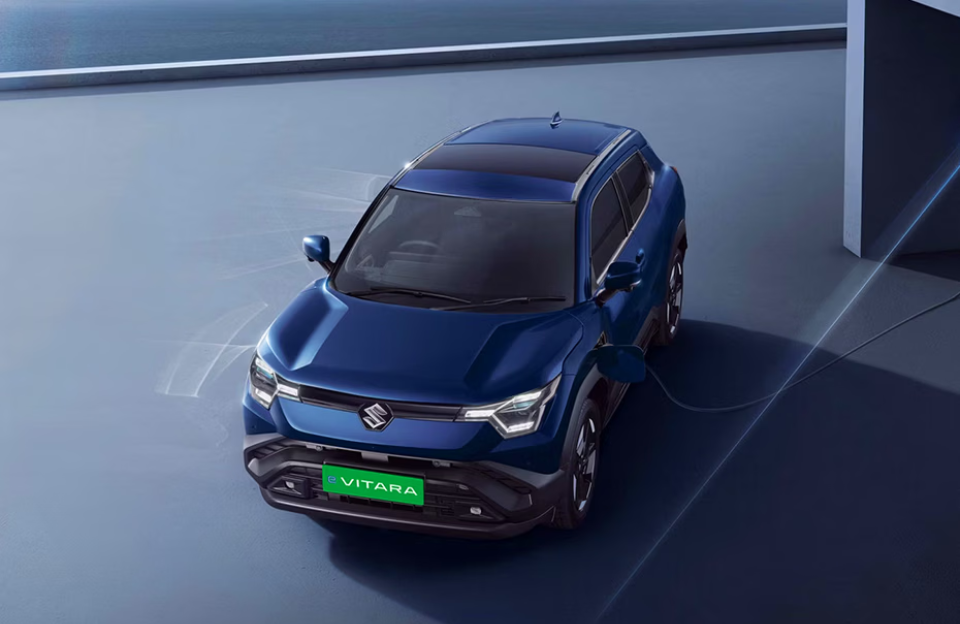
Feature expectations for the India-spec eVitara place it on par with premium mid-size electric SUVs. Buyers can expect large 19-inch alloy wheels, a glass roof, a dual-screen cockpit with a 10.25-inch digital cluster and a 10.1-inch touchscreen, an Infinity by Harman audio setup, wireless charging, and a 10-way power-adjustable driver seat. Premium touches such as semi-synthetic leather upholstery, keyless entry, connected car features through Suzuki Connect and rear privacy glass add to the SUV’s upmarket appeal. Maruti is also expected to retain the complete ADAS suite from global models, offering radar- and camera-based systems for safety and driver assistance. The electric SUV is equipped with seven airbags, ESP, hill hold, hill descent control and a TPMS, contributing to its strong safety credentials, further supported by the international version’s four-star Euro NCAP rating.
Practicality has been an important focus area for the eVitara. The cabin is designed with families in mind, offering sliding and reclining rear seats that allow passengers to optimise comfort or increase luggage room as needed. The boot space ranges from 238 to 306 litres depending on seat position, and the India-specific version is expected to receive revised interior storage areas to better suit local usage patterns. Headroom at the rear may feel a little restricted for taller occupants due to the sloping roofline, but overall space is expected to be competitive for its segment.
Pricing will play a pivotal role in the eVitara’s market performance, and Maruti is expected to follow an aggressive strategy. The starting price is likely to be around ₹20 lakh, with the 61 kWh version priced closer to ₹25 lakh. With this pricing structure, the eVitara will enter a fiercely contested segment, taking on rivals such as the Hyundai Creta EV, Mahindra BE 6, Tata Curvv EV, MG ZS EV and the upcoming Tata Sierra EV. Leveraging Maruti’s expansive service network, competitive pricing, established brand trust and global production scale, the eVitara has the potential to become one of the highest-selling electric SUVs in the country.
With the official launch just days away, the eVitara is shaping up to be one of the most important EV introductions in recent years, marking Maruti Suzuki’s long-awaited entry into the electric future.
check out:Maruti eVitara Launching on December 2: What To Expect