The Indian automotive market in 2025 is witnessing a major shift as more buyers move toward cleaner and more efficient mobility options. Two technologies have taken center stage in this transformation: Hybrid cars and Electric Vehicles (EVs). While EVs attract attention with zero-emission driving and futuristic appeal, hybrids continue to be a preferred choice for many Indian drivers because of their long-range convenience and lower dependency on charging networks.
In this detailed blog, we break down the Hybrid vs EV debate in India, comparing their cost, practicality, technology, maintenance, long-term usage, and environmental impact. This article is curated using insights from Rimello and AI-backed analysis from JustDriveAI, ensuring that the information reflects real-world Indian driving conditions, not foreign-market assumptions.
Whether you drive mostly in crowded cities, take frequent highway trips, or want a future-proof investment, this guide will help you choose the right path.
Understanding Hybrid Cars and EVs
What is a Hybrid Car?
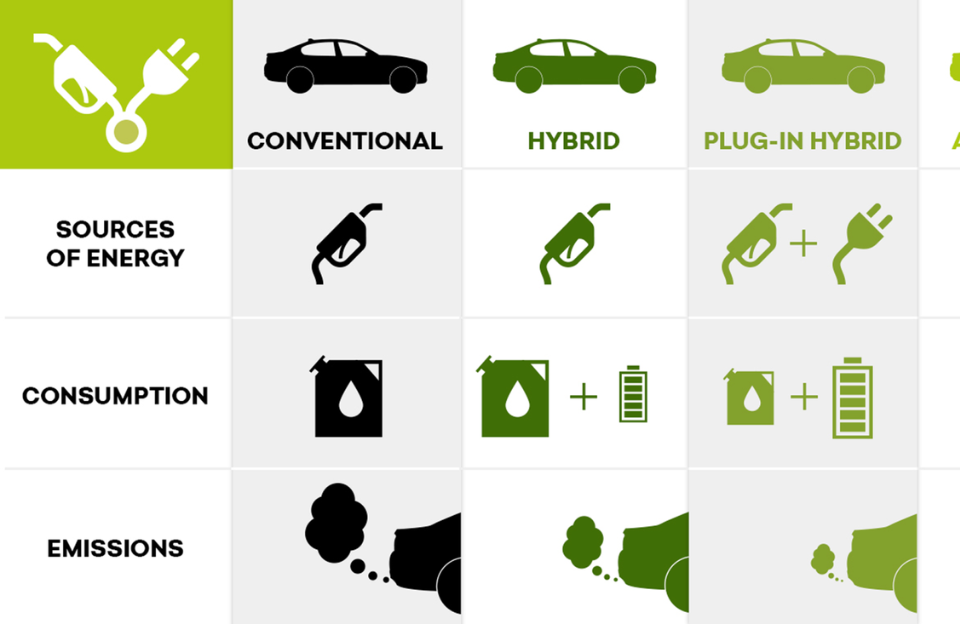
A hybrid vehicle uses a combination of an internal combustion engine (ICE) and an electric motor powered by a battery. The electric motor assists the engine during acceleration and low-speed driving to improve efficiency.
Key Advantages of Hybrid Cars
- Hybrid systems intelligently switch between the engine and electric motor, enabling strong fuel efficiency during urban traffic and moderate-speed city drives where stop-and-go patterns are common.
- Since hybrids use petrol or diesel fuel, they eliminate dependency on charging infrastructure, making them highly reliable for Indian users traveling across mixed city and rural networks.
What is an Electric Vehicle (EV)?
An EV runs solely on electric power from a rechargeable battery pack. It produces no tailpipe emissions and can be charged at home or at public charging stations.
Key Advantages of EVs
- Electric vehicles offer extremely low running costs, as electricity per kilometer is significantly cheaper than petrol or diesel, especially for daily city commuters and short-range users.
- EVs produce zero tailpipe emissions, making them ideal for metro cities facing poor air quality, while also being quieter and smoother compared to ICE or hybrid cars.

Hybrid vs EV: Detailed Comparison for India
Below is a clear breakdown of how both technologies perform for Indian buyers in 2025.
1. Running Cost and Fuel Efficiency
Hybrid Cars
- Hybrids offer outstanding mileage because they primarily use the engine on highways and electric support during city driving, making them suitable for mixed usage patterns seen across Indian metros and Tier 2 cities.
- You still spend on fuel, but consumption drops significantly compared to regular petrol or diesel cars, helping owners save over long-term daily commutes.
Electric Vehicles (EVs)
- EVs deliver the lowest running cost in India as electricity charges are much lower than petrol or diesel, particularly when using home charging setups.
- Public fast chargers are becoming more common in urban centers, but their per-unit charging rate may be higher than home electricity, which slightly affects running costs.
2. Range and Daily Usability
Hybrid Cars
- Hybrids offer excellent range with their larger fuel tanks, making them ideal for long highway trips or uncertain terrains where charging stations may not be available.
- They provide predictable performance because even if the battery depletes, the petrol or diesel engine continues driving without interruption.
Electric Vehicles
- EV range is steadily improving, with many models offering 300 to 500 km on a single charge, but real-world range varies based on temperature, speed, and driving style.
- Long-distance travel still requires careful planning of charging stops, making pure EVs more suitable for urban-dominant users who travel short to moderate distances.
3. Charging vs Refueling Convenience
Hybrid Cars
- Hybrids require no external charging and can be refueled at any petrol pump within minutes, making them extremely convenient for users who lack home-charging capability.
- This benefit is critical in India where many households still use shared parking or do not have dedicated charging infrastructure.
Electric Vehicles
- EVs can be charged at home overnight, which is the most cost-effective and convenient option for daily commuters staying in independent homes or societies with EV-capable parking.
- Public charging is expanding but still inconsistent across smaller towns, leading to range anxiety for many first-time EV users.
4. Maintenance and Ownership Experience
Hybrid Cars
- Hybrids require maintenance for both the engine and electric system, but manufacturers design them for durability, keeping maintenance moderately affordable.
- Because hybrid technology is less complex than EV battery replacement, long-term ownership remains predictable for most buyers.
Electric Vehicles
- EVs have fewer mechanical parts and no engine oil, resulting in lower maintenance requirements and fewer visits to service centers.
- Battery replacement is the only major long-term cost, but most modern EVs come with warranties up to 8 years, reducing buyer anxiety.
5. Environmental Benefits
Hybrid Cars
- Hybrids reduce carbon emissions significantly compared to conventional cars, especially in cities where electric mode helps cut fuel burn.
- However, they still rely on fossil fuels and cannot match the pure emission-free advantage offered by EVs.
Electric Vehicles
- EVs produce zero tailpipe emissions, helping reduce urban air pollution and aligning with India’s long-term shift toward green mobility.
- Renewable energy charging further enhances sustainability, although electricity in India still partly comes from coal-based grids.
6. Price and Value Proposition
Hybrid Cars
- Hybrids are generally priced between standard petrol cars and EVs, making them a balanced option for budget-sensitive buyers upgrading from ICE vehicles.
- The value they provide in terms of mileage and low dependency on external charging makes them ideal for practical, long-term ownership.
Electric Vehicles
- EVs tend to have higher upfront costs due to battery technology, but incentives, subsidies, and lower running costs make them attractive for long-term savings.
- For urban users with home charging, EVs offer unmatched convenience, cost savings, and modern driving experience.
Hybrid vs EV: Which One Should You Choose?
Your choice depends on your lifestyle and driving environment:
Choose a Hybrid Car if:
- You drive long distances frequently and want consistent range without worrying about charging stops.
- You live in an area with limited EV charging infrastructure and need reliable everyday usability.
- You prefer fuel efficiency without drastically changing your driving habits or vehicle maintenance routines.
Choose an EV if:
- You have a home-charging setup and drive mostly in the city with predictable daily distances.
- You want the lowest running cost and zero-emission mobility for cleaner, quieter travel.
- You are ready to adopt a modern, tech-forward car with future-ready driving features.
How Rimello and JustDriveAI Help You Choose Better
Platforms like Rimello provide real-time automotive updates, expert comparisons, launch details, and buyer-focused analysis that helps car shoppers stay informed about new hybrid and EV technologies.
JustDriveAI, using advanced artificial intelligence, evaluates real-world user reviews, tracking battery longevity, mileage variations, charging behavior, and long-term performance trends across hybrid and EV vehicles in India. Together, these platforms deliver unbiased, data-backed insights that empower Indian buyers to make smart, confident decisions in a rapidly evolving automobile market.
Hybrids offer better adaptability because they work efficiently in both city and highway conditions without requiring charging support. EVs are excellent for city driving where daily distances are short and predictable. Indian buyers who travel outside metro regions may find hybrids more dependable due to widespread fuel availability. EVs are ideal for urban users seeking low running costs and clean mobility.
Yes, EVs generally require less maintenance as they do not have engines, oil changes, or complex mechanical assemblies. Hybrids require traditional engine servicing along with electric system checks, though they are still more efficient than regular petrol cars. In the long run, EVs offer lower workshop costs. However, eventual battery replacement remains a higher expense compared to hybrid components.
EVs currently offer the lowest running cost in India because electricity is cheaper than petrol or diesel and home charging reduces cost further. Hybrids provide good mileage but still depend on fuel, making their running cost higher than EVs on daily city commutes. However, hybrids maintain consistent long-range performance. Urban users benefit most from EV savings, while mixed-usage drivers may find hybrids more economical.
Hybrids offer predictable long-term ownership because fuel infrastructure is readily available and engine technology is mature. EVs are future-forward and environmentally friendly, with warranties covering battery health for many years. If charging access is consistent, EVs can offer better long-term value due to lower maintenance and running costs. Buyers without home charging may find hybrids more practical in the long run.