
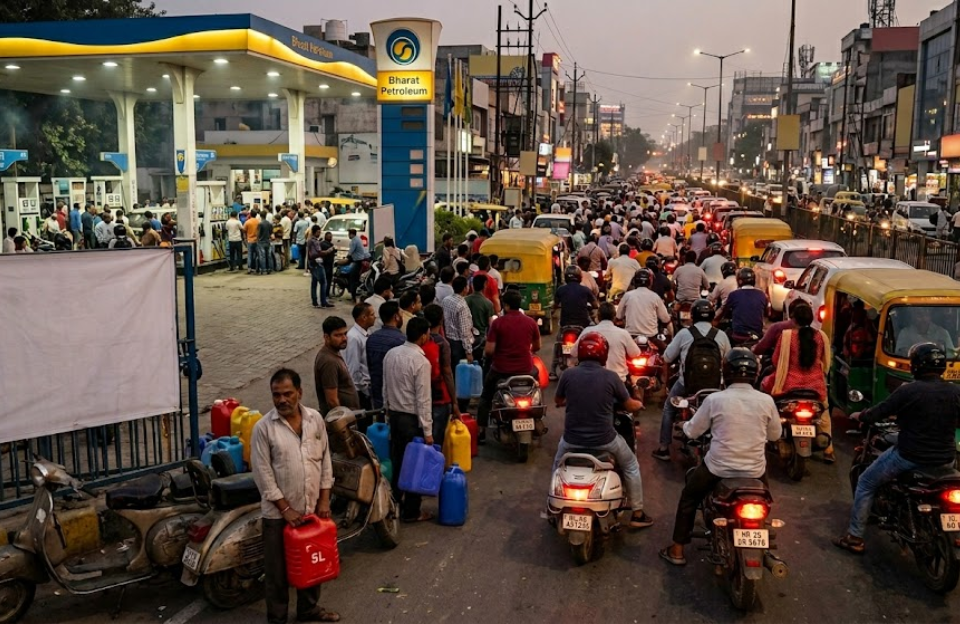
Across several cities, the ongoing petrol shortage is beginning to take a visible toll on daily life, as people spend long hours waiting at fuel stations. What was once a quick stop for refuelling has now turned into a test of patience, with queues stretching down roads and around corners.
From early morning to late evening, commuters are lining up outside petrol pumps, hoping to secure enough fuel for their daily needs. Office workers are reaching late, delivery drivers are losing valuable time, and families are postponing travel plans as uncertainty continues.
Many people say the lack of clear information is making the situation more stressful. “We don’t know when fuel will arrive or how long we’ll have to wait,” said one commuter after standing in line for nearly two hours. Such experiences are becoming increasingly common, adding to frustration on the ground.
The shortage has also led to a surge in demand, as people rush to fill their tanks whenever fuel becomes available. This panic-driven response is further increasing the waiting time at already crowded stations. In some areas, petrol pumps have run dry within hours of reopening, forcing operators to temporarily shut down.
Fuel station staff are working under pressure, trying to manage crowds and ensure fair distribution. Meanwhile, authorities have urged citizens to avoid unnecessary travel and remain calm, assuring that efforts are being made to restore regular supply.
Until the situation improves, people are finding ways to adapt. Many are turning to carpooling, public transport, or limiting their trips to essential travel only. For now, long queues and patient waiting have become part of everyday life, as the public hopes for a quick resolution to the fuel shortage.
Frequently Asked Questions:
Long waits are due to limited fuel supply and high demand, causing queues to build up at petrol stations.
It is causing delays in commuting, work disruptions, and forcing people to cancel or postpone travel plans.
Office workers, delivery personnel, transport drivers, and daily commuters are the most impacted.
Not all, but many pumps in busy areas are experiencing limited supply or temporary outages.
Yes, panic buying is increasing demand suddenly, making queues longer and fuel run out faster.