The automobile industry is undergoing one of the most transformative phases in its history. With digital connectivity taking center stage, a new era of connected cars is reshaping how vehicles are driven, managed, and maintained. For anyone following India autos and global car update news, the evolution of connected car technology represents a merging of mobility, artificial intelligence, and real-time data. It’s not just about driving anymore. It’s about being connected—seamlessly, intelligently, and securely.
Connected cars are no longer futuristic concepts showcased at auto expos. They are already on Indian roads, offering drivers remote diagnostics, real-time navigation, over‑the‑air updates, and AI-powered safety tools. This blog explores the major trends defining the connected car ecosystem, how they influence manufacturers, and what drivers in India and around the world should know to stay updated with the latest automobile developments.
What Makes a Car “Connected”?
A connected car, first of all, uses internet-enabled technologies to communicate with external systems such as other vehicles, infrastructure, cloud servers, and mobile devices. These connections, therefore, allow data exchange that significantly enhances the driving experience, efficiency, and safety.
Moreover, modern vehicles feature embedded SIMs, Bluetooth, or Wi-Fi modules, which enable them to access cloud platforms and share analytics on performance, location, fuel consumption, and driving behavior. Through innovations in telematics and onboard sensors, connected cars thus form an intelligent network that extends beyond the driver’s seat.
For anyone tracking the latest automobile updates, connectivity features are rapidly becoming standard across various price ranges—from entry-level hatchbacks to luxury SUVs. As a result, leading manufacturers such as Tata Motors, Hyundai, and MG Motor India are integrating extensive connected features into models tailored specifically for Indian consumers.
Key Trends Driving the Connected Car Revolution
- IoT and Cloud Integration
The Internet of Things (IoT) lies at the heart of every connected car system. Sensors embedded across the vehicle collect real-time data, which gets processed on secure cloud networks. This allows owners to monitor their car’s health, location, and performance through smartphone apps. For those who follow regular car update news, this trend has redefined vehicle management by reducing dependency on physical check-ups.
Automotive players now rely on predictive maintenance alerts to notify drivers of upcoming service requirements before a problem arises. This proactive approach minimizes breakdown risks, ensuring both safety and convenience. - Over-the-Air (OTA) Updates
Gone are the days when car owners had to visit service centers for software upgrades. Over‑the‑air technology allows manufacturers to send software updates directly to vehicles, just like smartphone updates. These updates improve infotainment systems, navigation accuracy, and even add new performance features.
In India’s growing auto industry, this reduces the need for manual servicing and keeps vehicles constantly optimized. Automakers such as Mahindra, Tata, and Hyundai have already implemented OTA updates in their connected lineups, making car ownership smarter and more efficient. - Vehicle-to-Everything (V2X) Communication
V2X technology enables cars to interact not only with other vehicles (V2V) but also with infrastructure (V2I) such as traffic lights or road sensors. It enhances safety by allowing the vehicle to warn the driver about potential collisions, traffic congestion, or road hazards in real time.
As India upgrades urban infrastructure under its Smart Cities Mission, V2X will play a crucial role in improving traffic management and reducing accidents. Many automobile latest updates from global shows highlight pilots where connected cars adjust speed automatically to sync with traffic flow, improving both safety and energy efficiency. - AI and Machine Learning Integration
Artificial intelligence has revolutionized how vehicles process data. With machine learning algorithms, connected cars can analyze driver behavior, recommend routes, adjust climate control, and even predict fatigue levels. AI personalization enhances comfort while improving operational safety.
Automakers and technology companies are investing heavily in AI-driven car systems. For developers tracking india autos and global innovation, the integration of language models and AI assistants is pushing human‑car interaction to new heights. It transforms the car into an intelligent travel companion rather than just a transport machine. - Telematics-Based Insurance
One of the fastest‑growing connected car applications is telematics-driven insurance. Insurers can now evaluate real driving data—speed, braking patterns, and mileage—to offer customized premiums. Responsible drivers benefit from lower costs, while unsafe driving behaviors can trigger alerts and higher rates.
For Indian car owners, who often find insurance processes complex, this technology brings transparency and financial rewards for safer habits. As more telematics data feeds into insurer analytics, policies will become as adaptive as the vehicles themselves. - Voice Assistants and In-Car AI Companions
Voice-activated systems like Alexa Auto, Google Assistant, and proprietary brand assistants are revolutionizing the driving experience. They allow hands-free control over infotainment systems, climate settings, and navigation. Advanced natural language processing enables smoother, human-like interactions.
The latest car update news highlights voice recognition systems that understand Indian accents and regional languages, making them accessible to more users. Automobile latest updates also show that automakers are integrating secure AI cores that keep user data private while processing commands locally within the vehicle. - Real-Time Navigation and Traffic Analytics
Modern infotainment systems use live traffic data from cloud-based sources to recommend alternate routes and predict arrival times. With city congestion increasing, real-time navigation is among the most valuable connected features.
India’s navigation ecosystem, led by Google Maps, MapmyIndia, and other domestic services, is aligning with connected vehicle architecture. Soon, cars will intelligently reroute themselves depending on weather, accidents, or traffic lights—offering smoother, safer journeys. - Electric Vehicles and Connectivity Synergy
Electric vehicles (EVs) are naturally suited to connected technology. Connectivity enhances battery management, charging infrastructure access, and route optimization for energy efficiency. Most EVs sold under India autos flagship initiatives already come with connected dashboards and mobile applications that track health and mileage remotely.
The car update news segment frequently features advancements in EV connectivity—such as remote charging control and automatic updates—allowing drivers to monitor battery status via smartphone. As EV adoption rises, the role of cloud-linked systems will grow further. - Cybersecurity and Data Privacy
With connectivity comes the responsibility of protecting sensitive data. Connected vehicles collect location, biometric, and behavioral information that must be handled with strict security standards. Recent automobile latest updates emphasize the growing requirement for encrypted communication layers between vehicle systems and cloud servers.
Carmakers are investing in end-to-end encryption, intrusion detection systems, and secure gateways to prevent hacking attempts. Driver trust depends on the assurance that personal data won’t be exposed or misused. - Infotainment and Personalization Boom
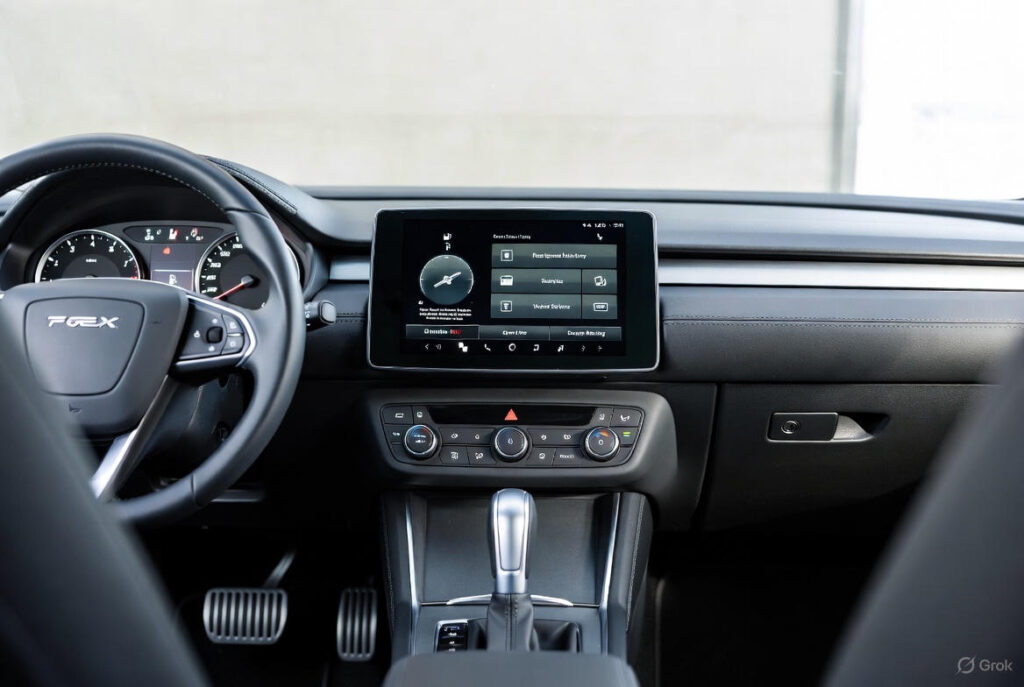
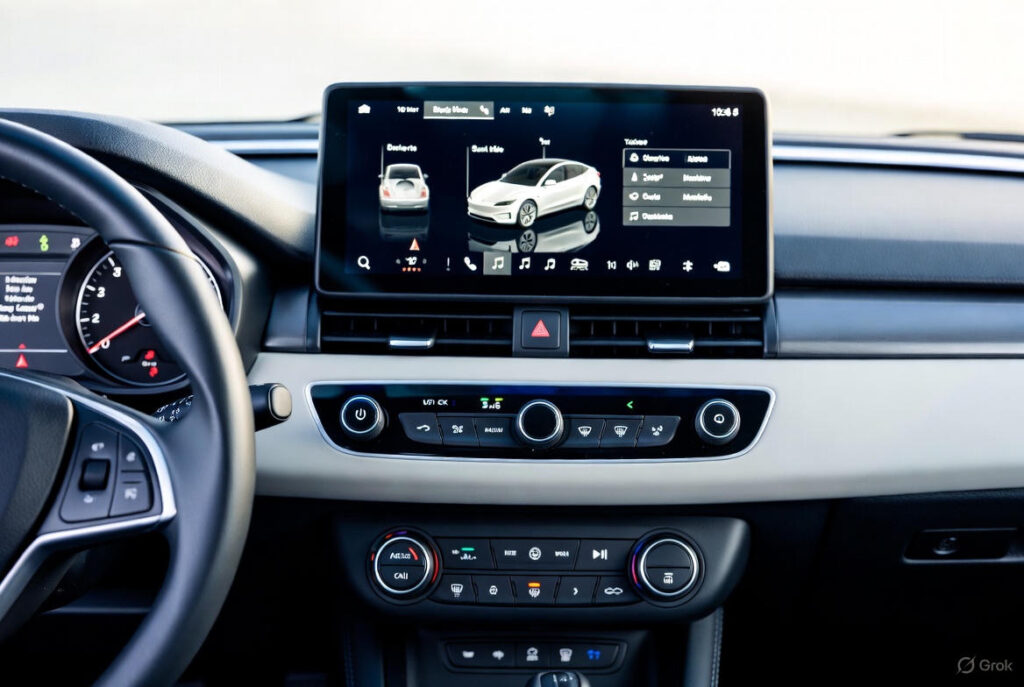
Infotainment systems have evolved from radio consoles into data-rich entertainment hubs. Using connectivity, drivers can stream media, sync social apps, or receive contextual notifications about nearby services. Passengers enjoy tailored playlists, seat preferences, and cabin temperatures saved to personal profiles.
India’s connected vehicles now support seamless smartphone integration through Android Auto and Apple CarPlay. Automakers are moving toward custom infotainment OS systems built on Android Automotive, offering app stores and AI-driven recommendations. - How Connected Cars Enhance Driver Safety
One of the most meaningful impacts of automotive connectivity lies in safety enhancement. Connected vehicles continuously monitor internal systems and surroundings through sensors and radar. Advanced driver-assistance systems (ADAS) use this information to alert drivers about potential hazards and activate automatic braking when necessary.
Real-time connectivity also assists during emergencies. If an accident occurs, connected systems automatically notify emergency services with precise GPS locations. This feature, essential for road safety improvement in dense Indian traffic, has been increasingly highlighted in recent car update news.
Certain models even integrate fatigue monitoring that observes facial expressions or steering input to warn drowsy drivers. These innovations align with India’s road safety goals and are becoming standard components of new vehicles. - The Indian Market Outlook
The connected car segment is gaining exceptional traction in India’s auto industry. Despite challenges like patchy internet coverage and affordability, the technology aligns perfectly with the nation’s digital transformation. According to recent auto industry updates, the Indian connected car market is projected to grow exponentially over the next five years.
Telecom expansion, widespread smartphone adoption, and robust policy support under initiatives such as Digital India and Smart Mobility are driving this momentum. Carmakers are partnering with software giants to develop ecosystems that integrate vehicle data with urban infrastructure and traffic departments.
For Indian consumers, demand is growing for vehicles that deliver not just mobility but convenience, entertainment, and real-time information. Manufacturers such as Hyundai (BlueLink), Tata (iRA), and MG (iSmart) are at the forefront of this revolution.
The Role of Artificial Intelligence in Future Vehicles
AI is evolving from a supporting feature to a driving force behind connected cars. Future systems will combine edge computing and deep neural networks to process sensor data locally within the car rather than depending solely on cloud servers. This shift will improve responsiveness and reliability in critical safety functions.
Natural language understanding will allow drivers to converse with their cars intuitively, without structured commands. Predictive AI will anticipate needs—whether suggesting rest stops or identifying worn-out parts—and trigger service bookings autonomously.
Additionally, machine learning models will continuously improve with every journey, creating a feedback loop that personalizes the vehicle for each user. The combination of AI, big data, and connectivity will define the next leap in the automotive digital era.
What Drivers Should Be Aware Of
While connected cars bring unparalleled advantages, drivers should nevertheless remain aware of specific responsibilities to ensure safety and privacy. For instance, maintaining software updates, using official manufacturer applications, and exercising caution when pairing third-party devices are essential practices.
Furthermore, data consent plays a vital role. By understanding how personal and vehicular data are collected and shared, drivers can help ensure transparency between owners and manufacturers. Additionally, drivers should verify compatibility when installing aftermarket devices to prevent security vulnerabilities.
Importantly, it is equally essential to understand that connected technology complements rather than replaces human judgment. Despite sophisticated automation, active participation and situational awareness remain critical for safe driving.
Future Predictions: Where the Industry is Heading
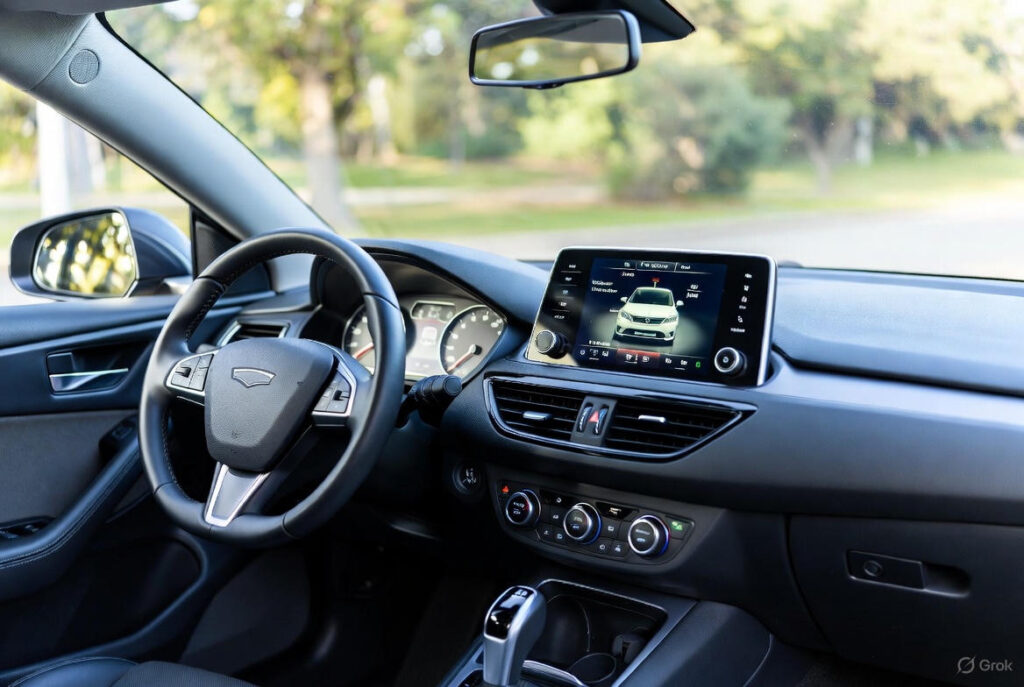
Over the next decade, the automobile industry will be dominated by connected, automated, shared, and electric (CASE) trends. Additionally, vehicle integration with 5G networks will enable high-speed, low-latency communication, which is essential for autonomous driving. Consequently, cars will begin interacting seamlessly with city grids, reducing congestion and enhancing environmental sustainability.
Moreover, hybrid infrastructures combining cloud computing and edge processing will enhance performance while balancing security needs. As India’s auto ecosystem matures, local innovations will likely lead global benchmarks in affordable connected mobility.
Furthermore, the automobile industry’s supply chain is adapting to this new paradigm. Software engineers, cybersecurity experts, and data scientists now hold key roles in vehicle development teams, demonstrating how digital skills define automotive competitiveness.
FAQs
1. What are connected cars and how do they work?
Connected cars are vehicles equipped with internet-enabled systems that actively communicate with external networks like other cars, infrastructure, or cloud platforms. They collect real-time data through sensors and telematics to enhance safety, navigation, and the overall driving experience.
2. What is the main benefit of a connected car?
The biggest advantage lies in improved safety and convenience. For instance, connected cars provide real-time navigation, predictive maintenance alerts, over-the-air software updates, and in-car voice assistance. These features make driving more secure, efficient, and comfortable.
3. Which car brands offer connected technology in India?
Several major Indian automakers, including Tata Motors (iRA), Hyundai (BlueLink), MG Motor India (iSmart), and Mahindra, have integrated connected car platforms across various models. Consequently, drivers can enjoy features like live tracking, remote controls, and AI-driven safety tools.
4. What is Vehicle-to-Everything (V2X) communication in cars?
V2X communication enables vehicles to exchange information not only with other vehicles (V2V) but also with infrastructure (V2I) and pedestrians (V2P). This system helps prevent accidents and manage traffic flow more efficiently, especially in smart cities.
5. How does AI improve connected car performance?
Artificial intelligence processes driving data in real time to personalize user experiences. For example, it assists with route optimization, fatigue detection, climate control, and predictive maintenance, continuously learning from the driver’s habits.
6. What are telematics-based insurance plans?
Telematics insurance uses data from connected car systems to assess driving behavior, such as speed, braking, and mileage. As a result, safe drivers can earn rewards or lower premiums based on their consistent good performance.
7. What is the future of connected cars in India?
The future of connected vehicles in India looks promising with the integration of 5G, AI, and smart infrastructure. Supported by initiatives such as Digital India and Smart Mobility, the Indian market is on track to become one of the fastest-growing connected car hubs globally.
Source/Resources
- Economic Times Auto (ETAuto) – Latest connected car news and updates in India. auto.economictimes.indiatimes.com
- MarketsandMarkets – India Connected Car Market forecast and analysis. marketsandmarkets.com
- Kingsway Accessories – Connected cars in India with Tata, Hyundai, MG features. kingswayaccessories.com
- Hyundai India – Bluelink connected car platform details. hyundai.com
- Indian Express – Qualcomm’s connected vehicle technology partnerships in India. indianexpress.com
- StartUs Insights – Top connected vehicle trends for 2025 globally and in India. startus-insights.com
- Intelematics – AI innovations in connected cars. intelematics.com
- Business Today – AI’s role in connected vehicle evolution. businesstoday.in
- Keysight Technologies – Overview of V2X communication technology. keysight.com